Source Nordic Simple Design Training Table for Schools, Offices, and Training Rooms
Browse a curated range of nordic simple design training table options and compare sizes, materials, frame styles, folding features, MOQ, and lead times across listings. With 30 products available, buyers can evaluate configurations suited to classrooms, meeting rooms, and training institutions before requesting quotes.
Key considerations
Products List




Comprehensive Sourcing Guide
Nordic Simple Design Training Table Sourcing Guide
Sourcing furniture that balances aesthetic minimalism with functional durability requires a disciplined approach to specification verification and supplier evaluation. The term "nordic simple design" typically refers to a style characterized by clean lines, light wood tones, and uncluttered forms, often utilizing natural materials like solid wood or high-quality veneers. However, in the context of bulk B2B procurement, buyers must distinguish between marketing aesthetics and actual manufacturing capabilities. The provided data indicates a diverse range of products labeled under similar descriptive terms, including conference tables, foldable units, and modular training desks. This variance necessitates a rigorous verification process to ensure that the final delivered product aligns with the intended visual and functional requirements of the training environment.
Procurement decisions for this category are heavily influenced by the specific use case, whether for permanent office installations, temporary training setups, or educational institutions. The observed market signals suggest that suppliers offer both fixed and modular configurations, with some products emphasizing space-saving features like folding mechanisms, while others prioritize structural stability for long-term daily use. Buyers must clearly define their operational needs before engaging with suppliers, as the distinction between a "conference table" and a "training table" often dictates the required dimensions, material thickness, and load-bearing capacity. Understanding these nuances prevents costly mismatches between ordered specifications and delivered goods, ensuring that the furniture supports the intended workflow without compromising on the desired aesthetic appeal.
Product Scope and Observed Listing Signals
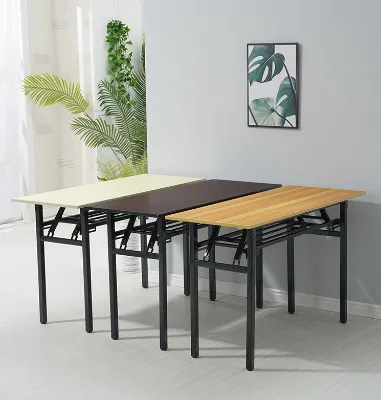
The current market landscape for training and conference furniture reveals a significant variation in product attributes, despite shared stylistic descriptors. High-confidence data points indicate that available products range from large, fixed-panel conference tables with dimensions such as 24001200750mm to compact, foldable units measuring 700X600X780mm. This disparity highlights the importance of verifying the exact form factor during the sourcing phase. For instance, some listings specify a "Trapezium" shape with metal pipe frames, while others describe "Panel" style wood structures. Buyers must scrutinize these technical descriptors to ensure the selected table fits the spatial constraints of the training room and supports the necessary number of participants comfortably.
Furthermore, the observed product conditions and customization options provide critical insights into supplier flexibility. Most listed items are marked as "New" and offer customization services, allowing buyers to tailor colors, sizes, and materials to their brand identity. The availability of "Many Colors for Selection" and specific material choices, such as solid wood desktops or metal frames, enables the creation of a cohesive interior design scheme. However, the presence of both "Knock Down Packing" and "Carton Packaging" options suggests that logistics and assembly requirements vary significantly between suppliers. Buyers should assess whether their installation team has the capacity for on-site assembly or if pre-assembled units are preferred, as this impacts both the delivery timeline and the final product integrity.
Technical Specifications to Verify
Dimensional accuracy is paramount when sourcing training tables, as incorrect sizes can disrupt room layouts and ergonomic standards. The supplied data lists specific standard sizes, including 24001200750mm, 30001200750mm, and 3600*1200mm for larger conference-style units, alongside smaller 700X600X780mm options for individual or paired setups. Buyers must verify that the selected dimensions accommodate the intended seating arrangement and allow for adequate legroom and cable management. Additionally, the thickness of structural components, such as the 30X30X1.5mm metal pipes noted in some listings, should be confirmed to ensure sufficient rigidity and load-bearing capacity, particularly for tables that may support heavy equipment like laptops or presentation materials.
Material composition and finish quality are equally critical factors that influence both the aesthetic and longevity of the furniture. The data indicates a mix of materials, including metal frames, solid wood desktops, and wood panel styles. Buyers should request detailed material specifications, including the type of wood veneer or solid wood used, the finish treatment for durability, and the gauge of metal components. It is also essential to verify the "Folded" or "Unfolded" state of the product, as this affects storage requirements and ease of movement. For training environments that require frequent reconfiguration, tables with disassembly capabilities or folding designs offer significant operational advantages, but these features must be tested for ease of use and structural stability during the sampling phase.
Compliance and Safety Documentation
Safety and regulatory compliance are non-negotiable aspects of furniture procurement, particularly for products used in educational and corporate training settings. While the provided data mentions ISO certification for some items, buyers must verify the specific standards applicable to their region, such as ANSI/BIFMA in the United States or EN standards in Europe. These standards govern aspects like structural stability, flammability, and chemical emissions, ensuring that the furniture poses no risk to users. Buyers should request valid certification documents from suppliers and cross-reference them with recognized testing laboratories to confirm authenticity. Relying solely on supplier claims without documented proof can expose the organization to liability in the event of product failure or safety incidents.
In addition to structural safety, environmental and health considerations play a growing role in procurement decisions. The mention of FSC certification in the background data suggests that some suppliers may offer sustainably sourced wood products. Buyers interested in green procurement should explicitly request FSC or equivalent chain-of-custody certifications to ensure that the wood materials are sourced from responsibly managed forests. Furthermore, inquiries into the chemical composition of finishes and adhesives are necessary to guarantee low VOC (Volatile Organic Compound) emissions, contributing to a healthier indoor environment. Verifying these compliance documents not only mitigates risk but also aligns the procurement strategy with corporate sustainability goals.
Cost Drivers and Commercial Terms
Understanding the factors that influence pricing is essential for effective budget management and negotiation. The observed price range of 4-550 USD reflects significant variation based on material quality, design complexity, and order volume. High-confidence data indicates an MOQ (Minimum Order Quantity) of 10PCS for some items and 100PCS for others, suggesting that economies of scale play a crucial role in unit pricing. Buyers should analyze the cost breakdown to identify which components, such as solid wood desktops versus veneer, or custom colors versus standard finishes, contribute most to the final price. This analysis enables more targeted negotiations and helps in making informed trade-offs between aesthetic preferences and budget constraints.
Commercial terms and payment structures also impact the total cost of ownership and cash flow management. The data specifies payment terms such as T/T (Telegraphic Transfer), Irrevocable L/C at Sight, and PayPal, offering flexibility for different transaction sizes. Trade terms like Ex-Work Factory, FOB (Free on Board), and CIF (Cost, Insurance, and Freight) determine who bears the responsibility and cost for shipping and insurance. Buyers must carefully evaluate these terms in the context of their logistics capabilities and risk tolerance. For instance, choosing Ex-Work terms may result in lower unit prices but requires the buyer to manage complex international shipping arrangements, whereas CIF terms provide greater convenience at a potentially higher cost. Clear agreement on these terms prevents unexpected expenses and delays.
Supplier Qualification and Quality Control
Supplier qualification is a critical step in mitigating procurement risks and ensuring consistent product quality. Buyers should conduct thorough due diligence on potential suppliers, verifying their business licenses, manufacturing capabilities, and past performance records. The data indicates that suppliers are located in various regions of China, including Zhejiang and Guangdong Province, which are known for their furniture manufacturing clusters. Buyers should assess the supplier's production capacity and lead times, which range from 20 days to 25 days, to ensure they can meet project deadlines. Additionally, requesting references from previous clients and reviewing case studies can provide valuable insights into the supplier's reliability and customer service quality.
Quality control measures must be established before production begins to prevent defects and ensure compliance with specifications. Buyers should implement a robust sampling process, allowing for a sample time of 2-5 days, to evaluate the product's build quality, finish, and functionality. It is advisable to conduct third-party inspections during production and before shipment to verify that the goods match the approved samples and contractual requirements. The data mentions a 3-year quality warranty, which serves as a guarantee of the supplier's confidence in their product. Buyers should clarify the warranty terms, including coverage for defects and the process for claims, to protect their investment. Establishing clear quality benchmarks and inspection protocols ensures that the final delivered products meet the expected standards.
Long-Term Procurement Checks
Long-term procurement success depends on establishing a sustainable relationship with suppliers and continuously monitoring product performance. Buyers should implement a regular review process to assess supplier performance based on metrics such as on-time delivery, product quality, and responsiveness to issues. The data indicates a delivery time of within 20 days for some items, which should be tracked to ensure consistency. Maintaining open communication channels and providing constructive feedback can help suppliers improve their processes and better align with the buyer's needs. Additionally, buyers should stay informed about market trends and technological advancements in furniture design to identify opportunities for innovation and cost savings.
Furthermore, buyers should periodically re-evaluate their procurement strategies to adapt to changing business requirements and market conditions. This includes assessing the durability and maintenance needs of the furniture over time, as well as exploring options for refurbishment or recycling at the end of the product lifecycle. The availability of customization options and spare parts should be verified to ensure long-term support for the purchased items. By maintaining a proactive approach to supplier management and product lifecycle planning, buyers can maximize the value of their furniture investments and contribute to a more efficient and sustainable procurement operation. Regular audits and performance reviews ensure that the sourcing strategy remains aligned with organizational goals and quality standards.
FAQs
What customization options are available for the conference table?
Customization is available for this conference table to meet specific buyer needs. The product supports various styles including modern and classic designs, allowing flexibility in selection while maintaining the core panel wood style and new condition standards.
Which delivery timeframes apply to the conference table orders?
Delivery time is within 20 days for standard orders of the conference table. Some foldable table variants may require 20 to 25 days lead time, ensuring prompt shipment while adhering to the specified production and packing requirements for each model.
Can the training table be disassembled for easier transport?
Yes, the table can be disassembled to facilitate convenient shipping and storage. It comes with knock-down packing and an instruction manual, ensuring that the metal pipe frame and wood components are securely packed for safe transit to the destination.
What are the standard size specifications for the conference table?
Standard sizes include 2400 by 1200 by 750mm, 3000 by 1200 by 750mm, and 3600 by 1200mm dimensions. These specifications ensure the table fits various meeting room layouts while maintaining the required structural integrity and modern design aesthetic.
How does the MOQ vary between different table models?
The minimum order quantity varies by model, with some conference tables requiring 10 pieces and foldable tables requiring 100 pieces. Buyers should verify the specific MOQ for the desired product model to ensure compliance with supplier purchasing requirements.
What payment terms are accepted for purchasing these tables?
Accepted payment terms include T/T and Irrevocable L/C at sight for most transactions. Some suppliers also accept PayPal for specific orders, providing flexible financial options for international buyers while ensuring secure transaction processing for the goods.
Which certifications apply to the training table products?
The products hold ISO certification, ensuring they meet established quality and safety standards. This certification applies to the manufacturing process and final product condition, providing assurance of reliability for use in schools, offices, and training institutions globally.